











Campaign Story
About the project
The 51 villages in the intervention area of Assam are deprived of their basic rights to health, nutrition, and education due to limited awareness and deep-rooted social norms. There is a high prevalence of maternal and child undernutrition, anemia among adolescent girls, instances of teenage pregnancies, and low immunization coverage. Moreover, poor school infrastructure and a shortage of trained teachers disrupt the continuity of education, leading to irregular attendance and dropouts, and eventually pushing children toward child labor and child marriage.
Making a difference
CRY America Project GVM is working to provide access to adequate healthcare and nutrition for mothers, children, and adolescents in the community. The project aims to reduce child malnutrition by registering infants at Anganwadi centres, monitoring their growth, ensuring immunization, and introducing healthy dietary practices. It also focuses on the health of pregnant and lactating mothers by supporting antenatal and postnatal care, immunization, dietary planning, counselling, and overall care. Additionally, the project works to reduce anemia among adolescent girls and strengthen preschool infrastructure in collaboration with School Management Committees, ensuring children can access education instead of slipping into child labor or early marriage.
The way forward
● Conduct sessions with 97 Panchayati Raj Institution members, ensuring the development of 35 Village Health Action Plans.
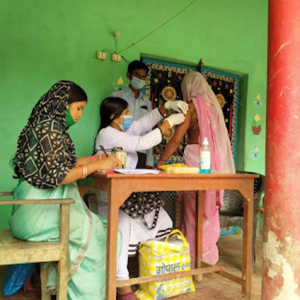
● Track and ensure that 568 pregnant women access antenatal check-ups, 620 lactating mothers access postnatal check-ups, and 836 children receive immunization.
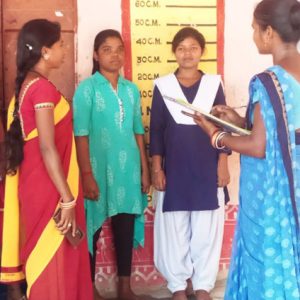
● Ensure access to Iron Folic Acid (IFA) tablets for 2,049 adolescent girls to address anemia.
● Identify and refer 70 high-risk pregnant women to access advanced healthcare services.
● Conduct sessions with mothers of 934 children aged 8 months to 6 years on healthy dietary practices to address undernutrition and malnutrition.
● Conduct regular awareness sessions with 568 pregnant women and at least 167 newly married couples on the importance of institutional delivery and birth spacing (maintaining a healthy gap between pregnancies).
● Enroll and ensure the retention of 349 children in Anganwadi Centres, enabling access to preschool education.
● Ensure the enrollment of 2,079 children in formal schooling.
● Train 45 Anganwadi workers on Early Childhood Care and Education.
Project Impact
364
Children received 100% vaccination

771
Pregnant and lactating mothers linked to government programs for maternity benefits

1,159
Adolescent girls received Iron Folic tablets to address anaemia

562
Pregnant women registered with Anganwadi Centers in the first trimester

568
Pregnant women received Tetanus Toxoid injections
412
Institutional deliveries ensured

484
Children aged 0-6 months received exclusive breastfeeding

25
Severely Underweight children transitioned to Moderate Underweight and to complete recovery

349
Children attending Anganwadi Centers for preschool education

367
Children from Grade 10 & 12 cleared their board exams
Last year’s disbursed grant for Jan ‘25 to Dec ‘25: $65,936
This year’s approved budget for Jan ‘26 to Dec ‘26:
From risk to recovery
When Imran* was 9 months old, he was identified as Severely Underweight, weighing just 6 kg. Limited financial resources and low awareness of healthy feeding practices had affected his growth.
CRY America’s project team promptly visited his home and, along with Anganwadi workers, counseled his parents on continued breastfeeding, age-appropriate complementary feeding, and the importance of maintaining a hygienic environment for the child’s well-being. Recognizing the seriousness of his condition, the team also guided the family on the need for advanced medical care and facilitated his referral to a Nutrition Rehabilitation Center for treatment. Over the next three months, Imran’s progress was closely monitored by frontline health workers and Integrated Child Development Services (ICDS) staff. As his condition began to improve, the project team continued working with his parents, helping them understand the importance of nutritious food, balanced diets, and consistent care at home.
With sustained support, regular monitoring, and the family’s growing awareness, Imran’s health steadily improved. He moved from the Severely Underweight category to Moderately Underweight, reaching 10 kg, and is now on a positive path toward recovery.
*Name changed to protect child’s identity

Project Photo Gallery